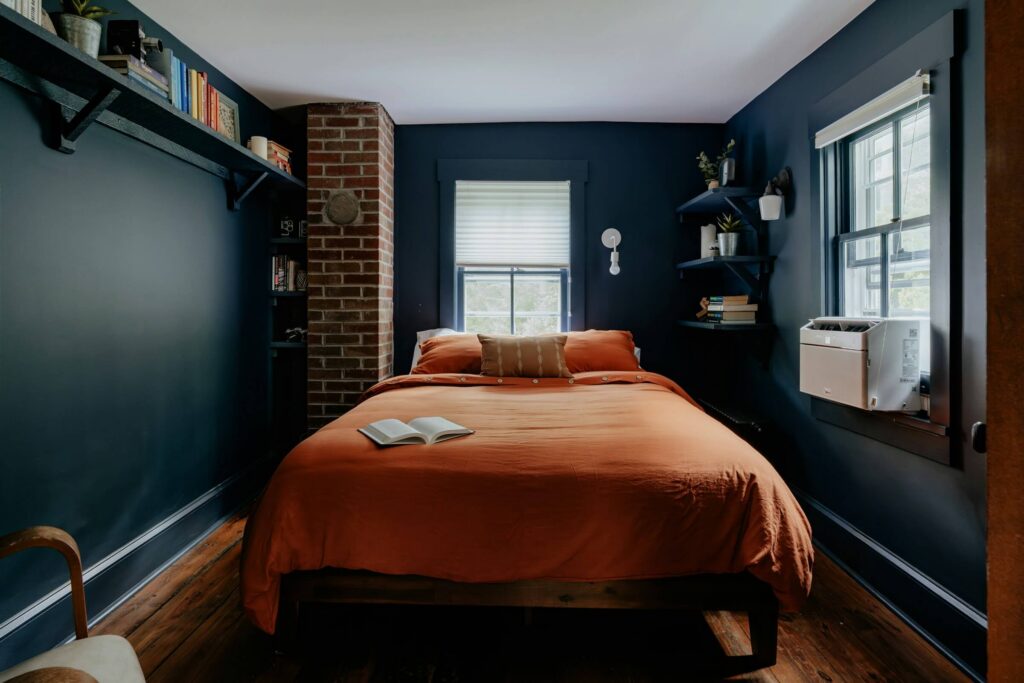
Window AC units have come a long way from their bulky, hard-to-install predecessors. Today, energy-efficient window AC units are more cost-effective than ever, with ENERGY STAR-certified models using up to 10% less energy than standard units. However, their effectiveness depends on your room size, insulation quality and window performance.
What Is an Energy-Efficient AC Unit?
A window AC unit is a compact cooling system that’s perfect for spaces where central air conditioning isn’t feasible, such as apartments, small homes or single rooms. They’re designed to fit most standard-sized windows, with options also available for custom window types.
The unit’s components, which usually include a compressor, evaporator coils, condenser and fan, work together to cool the air inside a room while expelling heat outside. Common features for a window air conditioner include an adjustable thermostat, remote control, timer, energy-saver mode and multi-speed fans. Advanced models may offer connectivity for smartphone control, built-in air purifiers and noise-reduction technology.
What to Look For in Energy-Efficient AC Models
Searching for key energy ratings when you’re choosing your new window unit? Here are some efficiency standards you can use to compare different models’ performance:
- ENERGY STAR ratings: The ENERGY STAR program, run by the U.S. Environmental Protection Agency (EPA), recognizes energy-efficient products that meet certain set standards, like Window World windows and doors.
- CEER ratings: Combined Energy Efficiency Ratios (CEERs) measure air units and central air efficiency by factoring in cooling performance and power that’s used when the AC is off.
- BTU sizing: BTUs, or British Thermal Units, measure how much heat AC units can remove per hour. Five thousand BTUs is typical for a small room, and 12,000 for larger spaces like open apartments.
- Eco modes: Many modern AC units have an Eco Mode that recycles compressed air once the target temperature is reached, saving energy and keeping money in your wallet.
- Programmable thermostats: Automate home heating or cooling with a programmable thermostat that “speaks” directly to your AC, controlling when the AC flips on (for example, at a certain time of day, or when the indoor temperature reaches a specific degree).
Portable cooling options like fans are helpful, but ultimately, long-term efficiency upgrades, like permanent window units, are key to keeping your home comfortable and running smoothly without breaking the bank. Try combining a window AC unit with other energy-efficient tech to stay cool.
Is It Cheaper to Run Central AC or a Window Unit?
Window AC units are generally more affordable to run than a traditional central air unit, but that doesn’t necessarily make them the most efficient choice for every home. This table demonstrates how window AC units and central air stack up against each other in different home scenarios:
| Scenario | Window AC Unit | Central Air |
| Single-room cooling | More cost-effective | Higher costs |
| Whole-home cooling | Inefficient | Very efficient |
| Installation cost | Low | High |
| Long-term energy performance | Depends on insulation | More consistent |
How Windows Impact AC Efficiency
Insulated, energy-efficient windows play a larger role in keeping your home comfortable than you may think. Drafty, single-pane windows cause air leakage, letting your cooled air escape through small cracks in the frame. Plus, single-pane windows enable solar heat gain, making it harder for your AC unit to keep your space comfortable.
It pays off to invest in ENERGY STAR-certified window replacements, which can reduce heat entry during warmer months, potentially decreasing your need for supplemental AC. A Window World expert can explain how.
How to Make Windows More Energy Efficient
Curious what goes into an energy-efficient window? Here are some of the elements that help Window World’s energy-efficient windows perform for years:
- Weatherstripping: Serving as a first line of defense, weatherstripping stops moisture and uncomfortable temperatures from getting in your home.
- Low-E Glass: Our Low-E glass packages reduce UV ray penetration and keep your home comfortable without limiting views.
- Warm-Edge Spacers: Intercept™ Warm-Edge Spacers insulate the exterior edges of a sealed frame unit for added security against heat gain or loss.
- Multichamber vinyl framing: Our vinyl framing is constructed with multichambered frames that repel or trap unwanted weather.
- Insulated foam cores: As an extra layer of protection against heat gain or loss, our vinyl frames contain insulated foam cores.

Frequently Asked Questions
Is a window AC unit more energy-efficient than central air?
It depends on how much space you’ll need to cool. If you’re just interested in cooling one space, a window AC unit is cheaper and more energy-efficient than central air. However, if you’re looking to cool your entire home, or several rooms, central air conditioning is the more appropriate option.
What size window AC unit do I need?
Choosing the right-sized window AC unit is key to efficient cooling. Start by measuring the width, height and depth of the desired window. Then, determine the ideal BTU rating to match the unit size with your space.
BTUs measure how much heat the AC can remove per hour, typically ranging from 5,000 for smaller rooms to 12,000 for larger areas or entire apartments. Key factors influencing BTU needs include:
- Sunlight exposure (more sunlight = higher BTUs)
- Number of occupants (add about 600 BTUs per person)
- Kitchens, which may require an extra 4,000 BTUs due to cooking heat.
An undersized unit will struggle to cool effectively, but don’t automatically buy the largest unit you find, either. An oversized unit may cool too quickly without proper dehumidification.
How much electricity does a window AC save per month?
The answer to this depends on how you’re using your window AC unit, local electricity rates and the unit’s size. Generally, you’ll see higher electricity savings if you raise your AC temperature slightly and control the amount of space your unit will cool. If you use your AC unit only during peak hours, for instance, you’ll see higher energy savings.
Can new windows reduce my AC usage?
Installing replacement windows with double- or triple-pane designs can significantly reduce your home’s energy consumption and heat gain, especially if they contain Low-E glass that reduces UV ray penetration. The reduced cooling loss from tighter seals helps keep your AC unit’s cooled air inside where it belongs.
Are ENERGY STAR window air conditioners worth it?
Yes, ENERGY STAR-rated window AC units are absolutely worth it when compared to non-ENERGY STAR units. While they cost more upfront, you’ll see lower energy usage over time, which means much lower monthly energy bills. The added upfront investment usually pays for itself in savings.
Replacing Windows Brings Added Benefits to Window AC Units
Window AC units offer practical and affordable cooling for small spaces. They can also do their jobs much more easily when supported by energy-efficient windows. For consistent room temperatures and savings on energy bills year-round, upgrade to energy-efficient windows from Window World. Get started with your free estimate!